Start homesteading where you live.
The first useful question is not “What should I buy?” It is “What can this place and this schedule reliably support?”
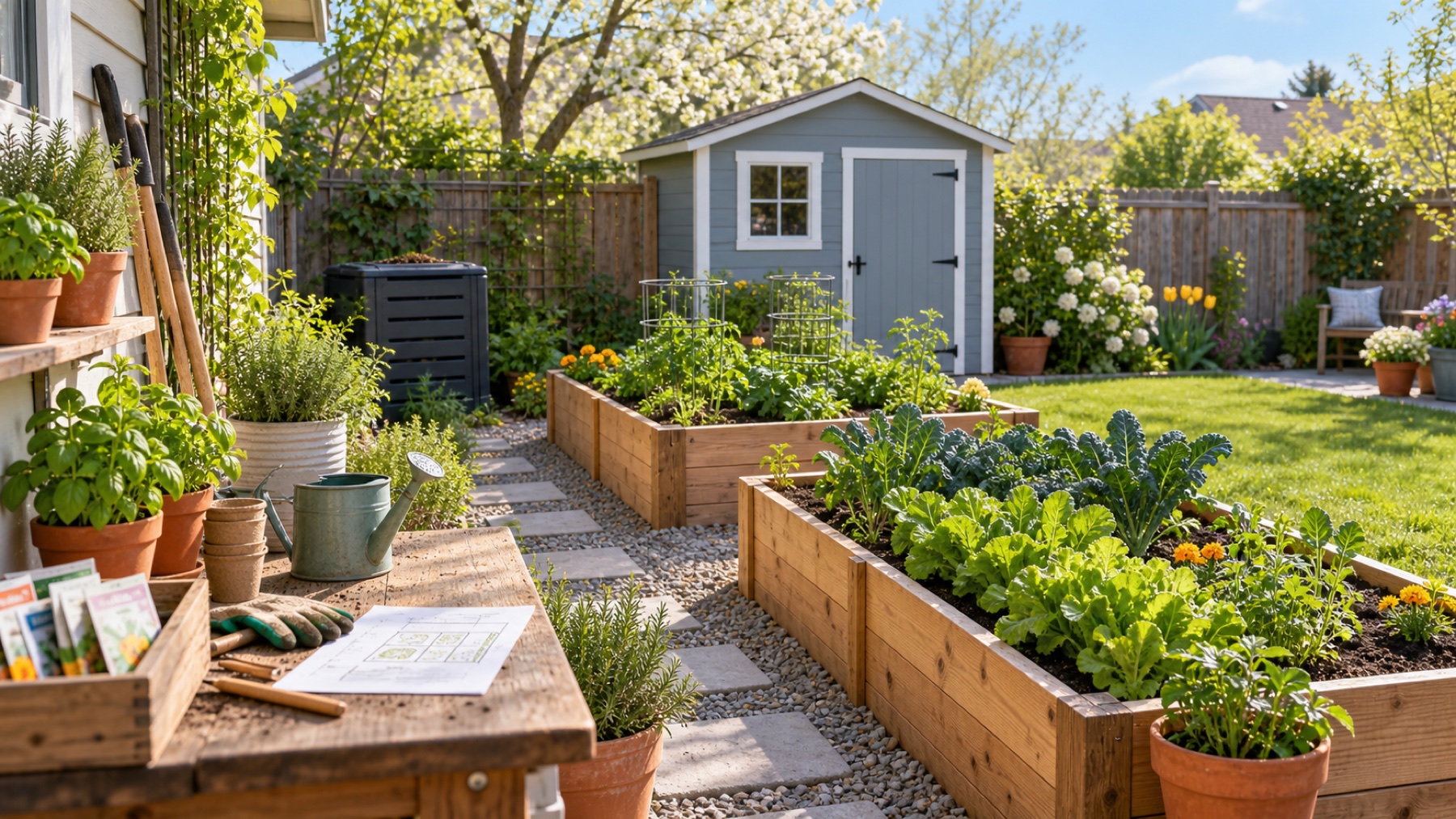
Map five limits
| Limit | What to observe |
|---|---|
| Light | Direct sun by hour through the growing season. |
| Water | Source, distance, restrictions and drainage. |
| Space | Access, roots, utilities, containers and storage. |
| Time | Minutes available during the busiest ordinary week. |
| Rules | Lease, HOA, zoning, setbacks and local codes. |
Choose one learning project
Good first projects produce feedback quickly: a small herb container, one compost system, or a modest bed of vegetables the household already eats. USDA describes urban agriculture as ranging from backyard and community gardens to rooftops and controlled indoor systems. Land size does not define whether the skills are useful.
Set a finish line: define what success means for one season—twelve herb harvests, a finished batch of compost, or a weekly salad bed.
Record costs, hours, harvests and failures. Expand only after the maintenance fits normal life.