Your first compost bin: keep it simple.
Compost needs carbon-rich and nitrogen-rich materials, moisture and air. A convenient location and repeatable routine matter more than a fancy bin.
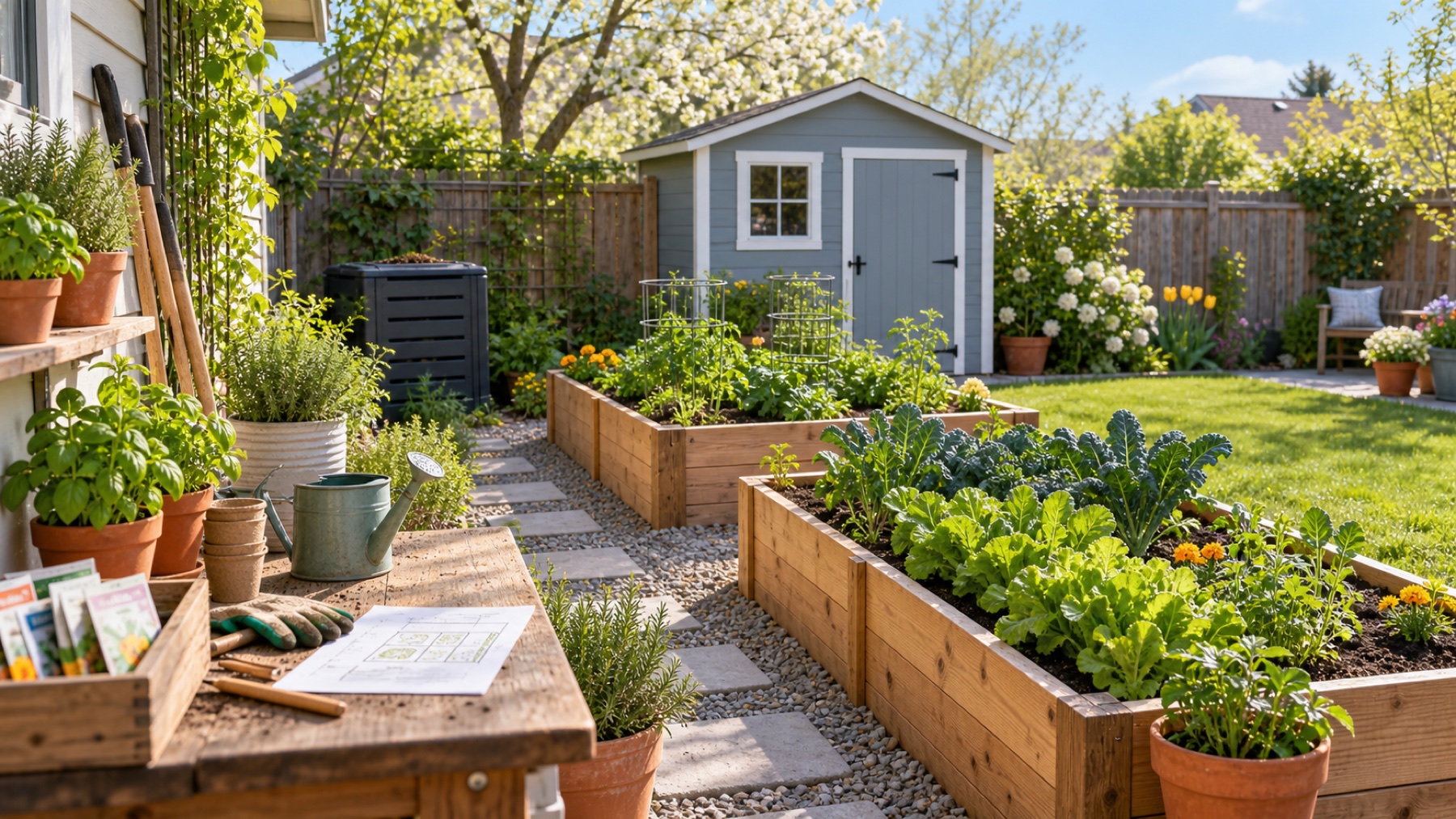
Choose a legal, workable location
Check local rules. Pick a drained area close enough to use, with room to turn or mix materials. Penn State Extension recommends roughly 25–30 parts carbon to one part nitrogen as a preferred starting ratio.
Know the two material groups
“Browns” include dry leaves, straw and some woodier material. “Greens” include fresh plant material, vegetable scraps and coffee grounds. Avoid meat, bones, fats, pet waste and visibly diseased plant material in a basic home pile; local rules may restrict other inputs.
Use finished compost thoughtfully
Test soil before treating compost like fertilizer. Compost can improve organic matter, aeration and water-holding capacity, but nutrient needs vary.